

Taking an e-course can, in many ways, turn out to be more demanding than taking a physical course. Without instructors to develop a supportive learning atmosphere and with a lack of fellow students with whom to share your thoughts with, e-courses can be far from straightforward. There is often an unspoken expectation by ourselves and managers, that the knowledge from the course can be implemented quickly and easily into our everyday work (which can often be easier said than done).
The elements that make e-learning so great (the self paced and independent nature of the courses), can quickly cause difficulties if you are not conscious about the potential pitfalls and struggles involved in taking e-courses.
The info-graphic below shows how important the time spent before and after taking the course actually is. In short, without proper preparation and follow-up work after the course, your learning will be less effective.
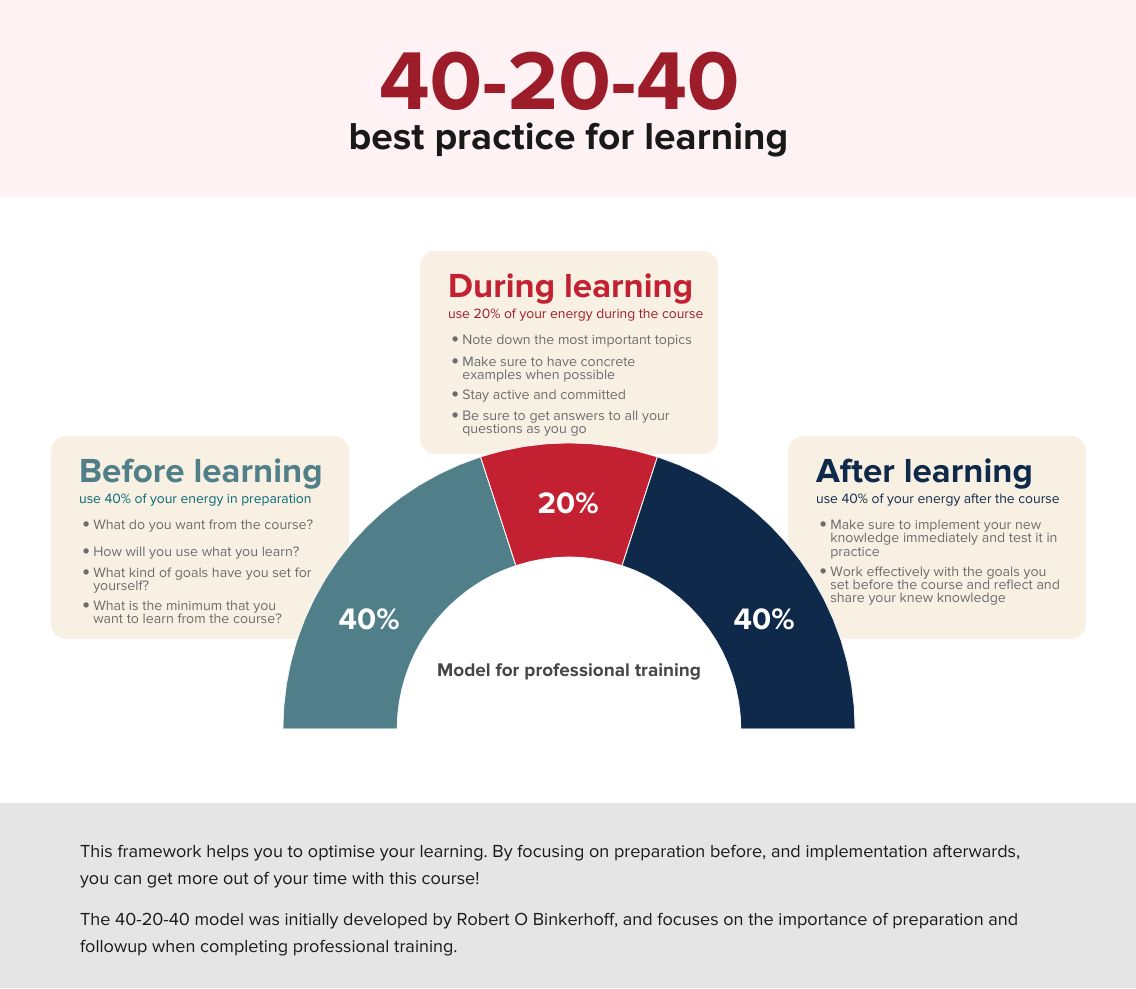
In some ways e-learning can demand more of you than a traditional in-person course, because it can be hard to get access to dialogues and feedback as you learn.
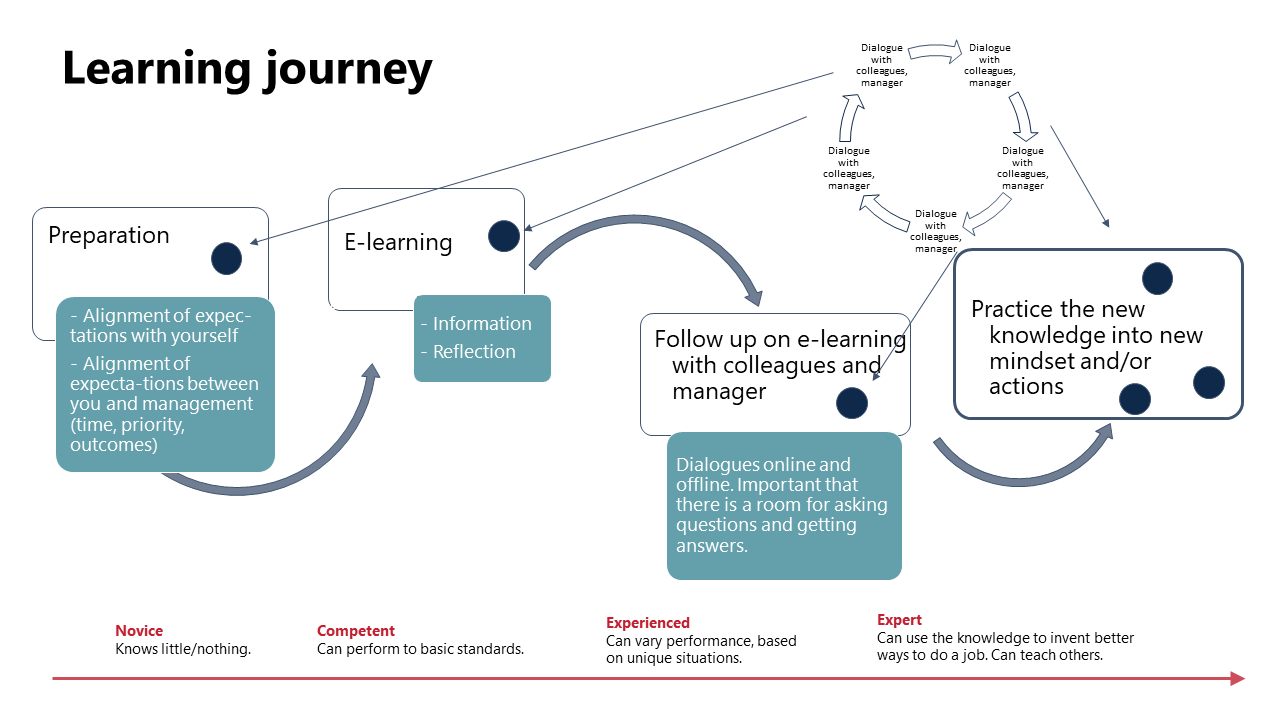
The image above shows the importance of these dialogues when participating in e-learning. The whole image itself shows the phases in the learning journey from being a novice getting new knowledge to becoming - maybe but not necessarily - an expert.
Moving from being a "novice" to "experienced" is effected by your own dedication, expectations, and the framework itself. For some it will be a fast development, for others, simply getting to the "competent" phase is enough.
The three important takeaways in all this are:
