

In many ways, taking an e-course can be much more demanding than a physical course. You do not, for example, have a facilitator or instructor to create a supportive learning atmosphere, and the absence of other participants to share your thoughts with can also be challenging. We also often have a lot of expectations from ourselves and our managers that we can translate the knowledge from the course into your job almost instantly upon finishing the e-course.
E-learning has many benefits, like it being self-paced nature, and the fact that it can be done independent of time or location. However, these pros can quickly become cons if you are not conscious about the framework within which you are taking the e-course, and if you are unaware of the mechanisms behind the learning process.
The info-graphic below shows how important it is to prepare for a course before you start, and to work with it after you are done. In other words, if you don't prepare and follow-up properly after taking a course, the effectiveness of the course itself will be poor.
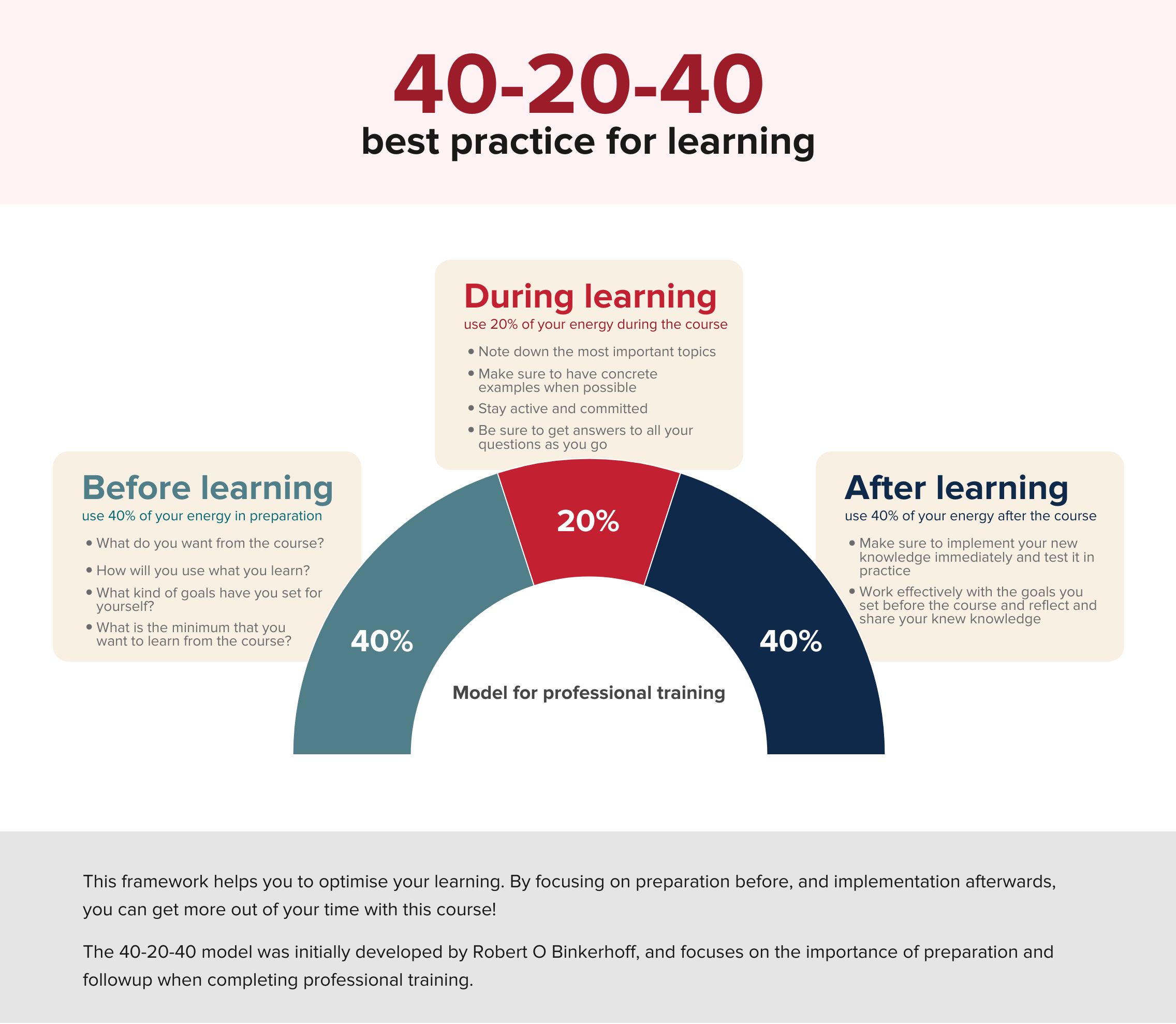
In some ways you can say that e-learning demands more of you than attending a traditional physical course does, as e-learning is something you take almost entirely by yourself, so the most important ingredients in learning, like engaging in dialogues and receiving feedback, can be hard to get.
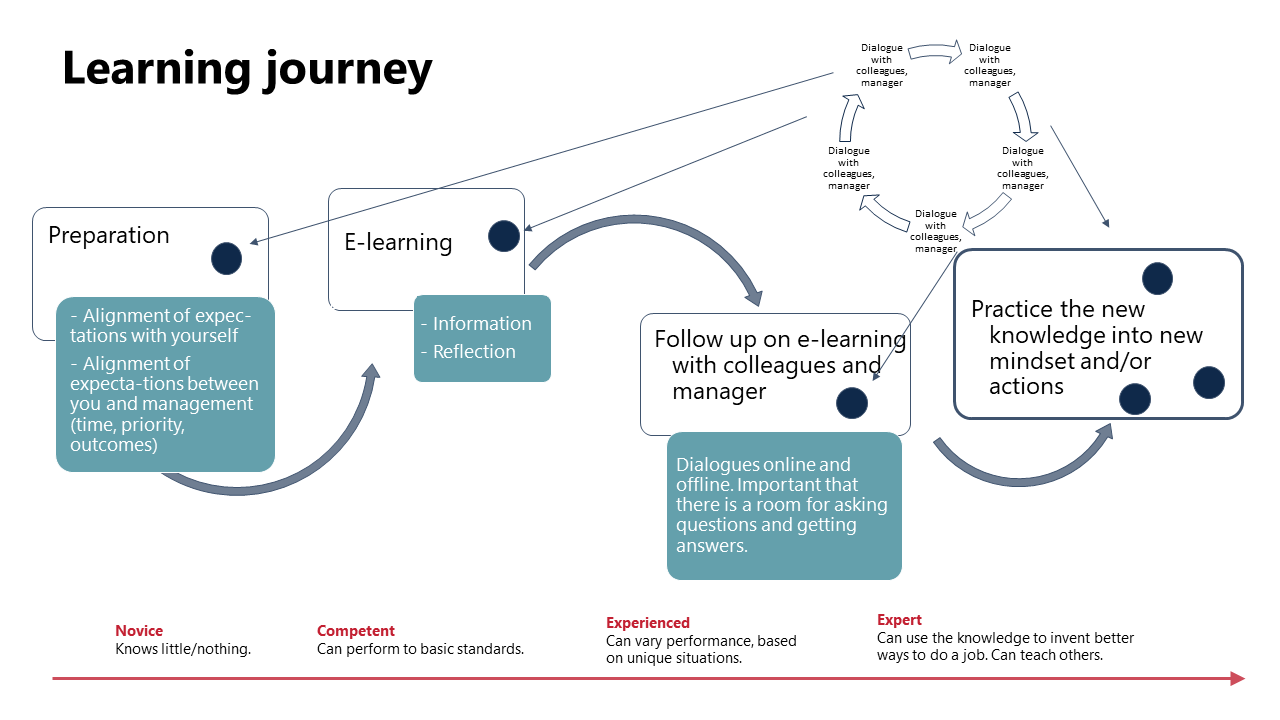
The image above shows the importance of these dialogues when participating in learning. The image itself shows the phases in the learning journey, from being a novice and getting new knowledge, to becoming (possibly, but not necessarily), an expert.
Moving from being a "novice" to "experienced" is effected by your own dedication, expectations, and the framework itself. For some, it will be a fast development, for others, simply getting to the "competent" phase will be enough.
The three important takeaways in all this are:
